A good first factory is observable and recoverable. This guide combines official Wiki mechanics with a user-authorized v0.4.12 vanilla test: Water and Sand become Wet Sand, the Shaker separates Gold, and a dedicated Residue exit keeps the line moving.
Input
Sand + Water
Processed material
Wet Sand
Core machine
Shaker
Failure to prevent
Residue backup
Last Checked: 01 September 2026
User-authorized in-game test · vanilla Early Access build · user save
Quick answer
Clear the first gate before scaling
In my v0.4.12 Vanilla save, I rushed Hover Gear first, built the Gold loop, confirmed the 1 Sand + 1 Water to 2 Wet Sand result, then reserved the 500 Gold Kinetic Press target. When Wet Sand mounds or Residue backs up, I stop adding input and clear the downstream route before expanding.
🚫 100% Text & Diagram Based: This roadmap does not spoil late-game alien artifacts or end-game lore. Follow this proven 3-hour progression sequence without watching long videos.
Early Tech Unlock Priority Order: ① Hover Gear (Crucial 3D mobility above reactive terrain) ➔ ② Drill & Mining Speed (Cuts early terrain excavation time in half) ➔ ③ Logistics Filters (Prevents catastrophic solid/fluid cross-contamination) ➔ ④ Kinetic Press & Burners (Converts 25% waste into high-tier Gold & Seeds).
Advertisement
First 3-Hour Progression Tree
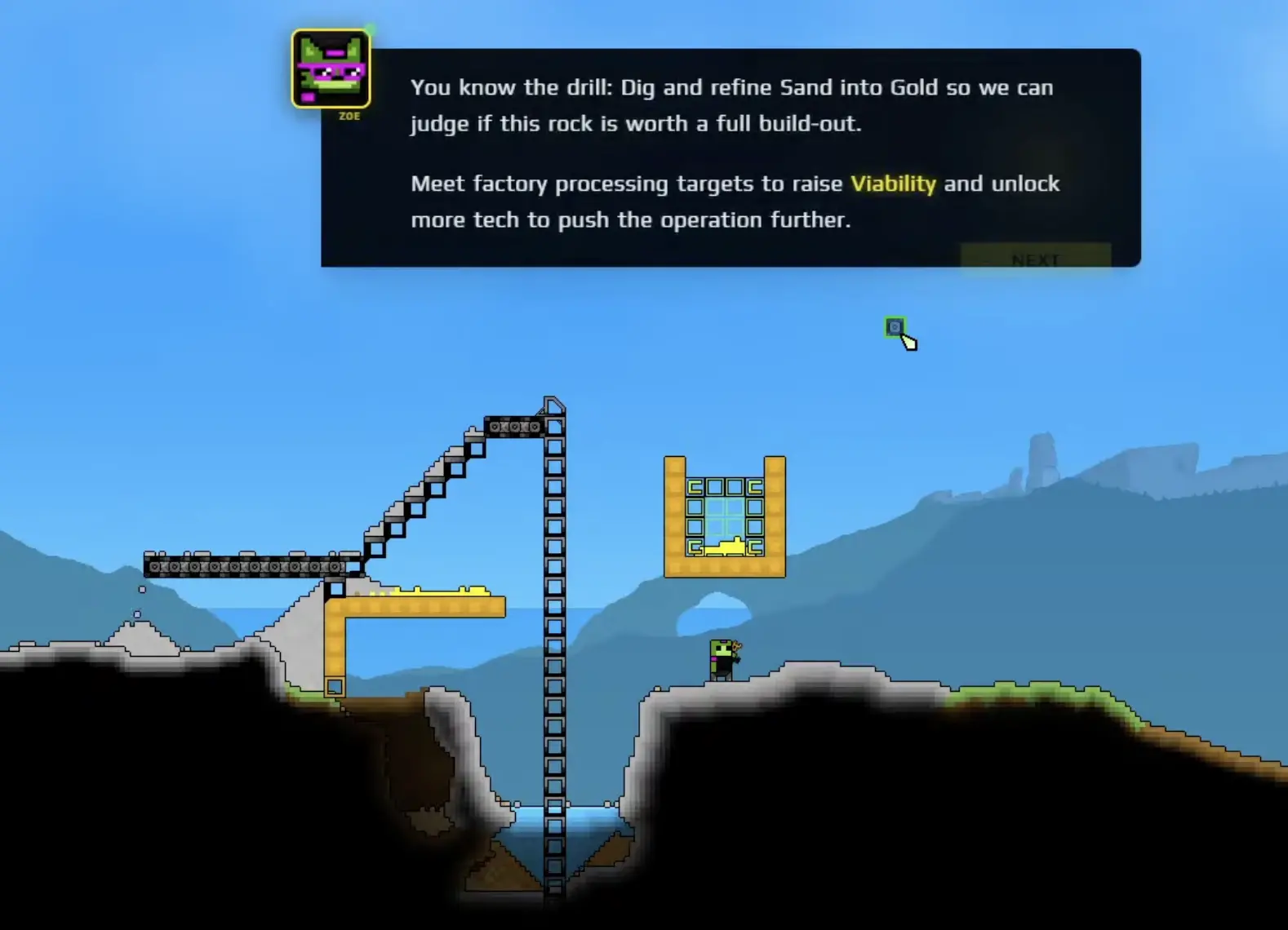
First 3 hours milestone: establish the initial Gold loop before unlocking complex machinery.User-authorized in-game test · vanilla Early Access build · user save
Early Game Research & Tech Priority Matrix
Tech / Upgrade
Recommended Rank
Immediate In-Game Impact
Hover Gear
Priority #1 (Must Rush)
Allows vertical inspection & prevents terrain death
Excavator Drill Speed
Priority #2
Doubles base excavation rate and manual clearing
Logistics & Smart Filter
Priority #3
Separates Gold pixels from slow-moving Residue
Kinetic Press (500 Gold)
Priority #4
Unlocks 25-block gravity compression for Burnt Slag
02
Make the first Gold loop run end to end
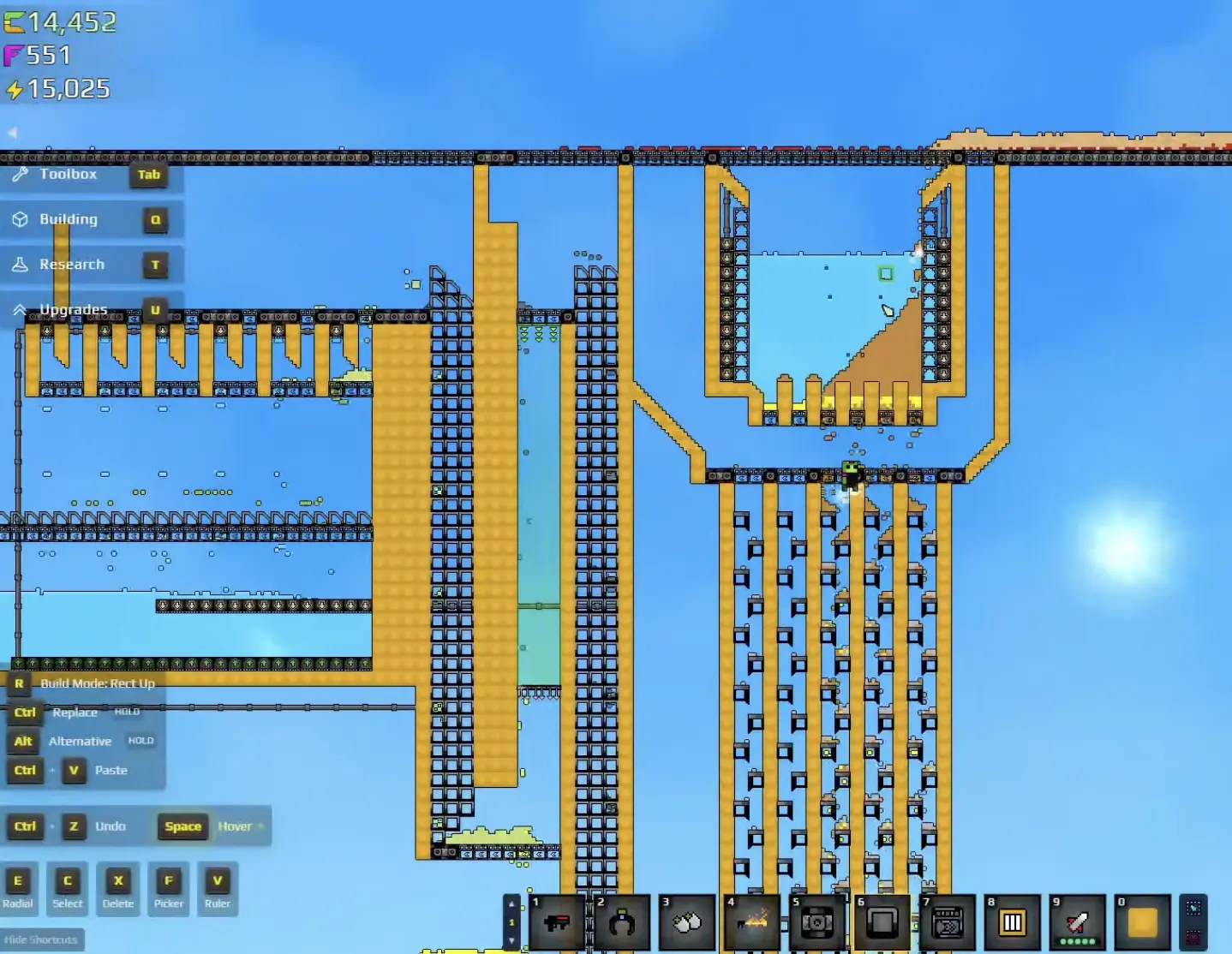
The first factory becomes useful when its route is complete: Sand and Water become Wet Sand, the Shaker separates it, Gold has a catch path, and Residue has somewhere to leave. Build that entire route before adding a second input.
The tutorial milestone and the running factory below are personal captures. They establish what was working in this save, not a universal starter footprint.
The working reference
The full early loop running after its output path was cleared.User-authorized in-game test · vanilla Early Access build · user save
03
Verify the mix before building around it
In my v0.4.12 Vanilla test, 1 Sand touching 1 Water produced 2 Wet Sand. I use that as a quick input check: when the mixer looks wrong, I fix the contact point before blaming the Shaker.
User-authorized in-game test · vanilla Early Access build · user save
04
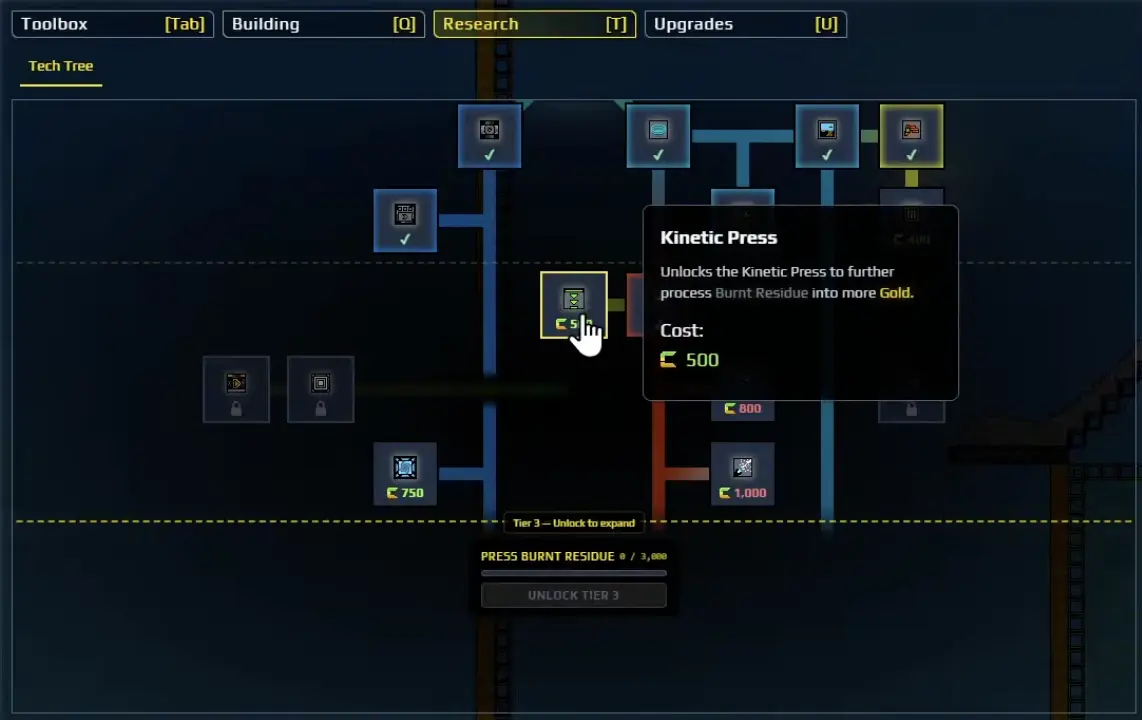
Reserve the first Press target
The Kinetic Press research panel in this save showed a 500 Gold target. That makes early collection useful, but it is not a reason to starve the Gold loop of clearance space. Keep the line moving first, then reserve the output.
User-authorized in-game test · vanilla Early Access build · user save
The 500 Gold research target visible in this personal save.User-authorized in-game test · vanilla Early Access build · user save
05
Stop feeding the blockage first
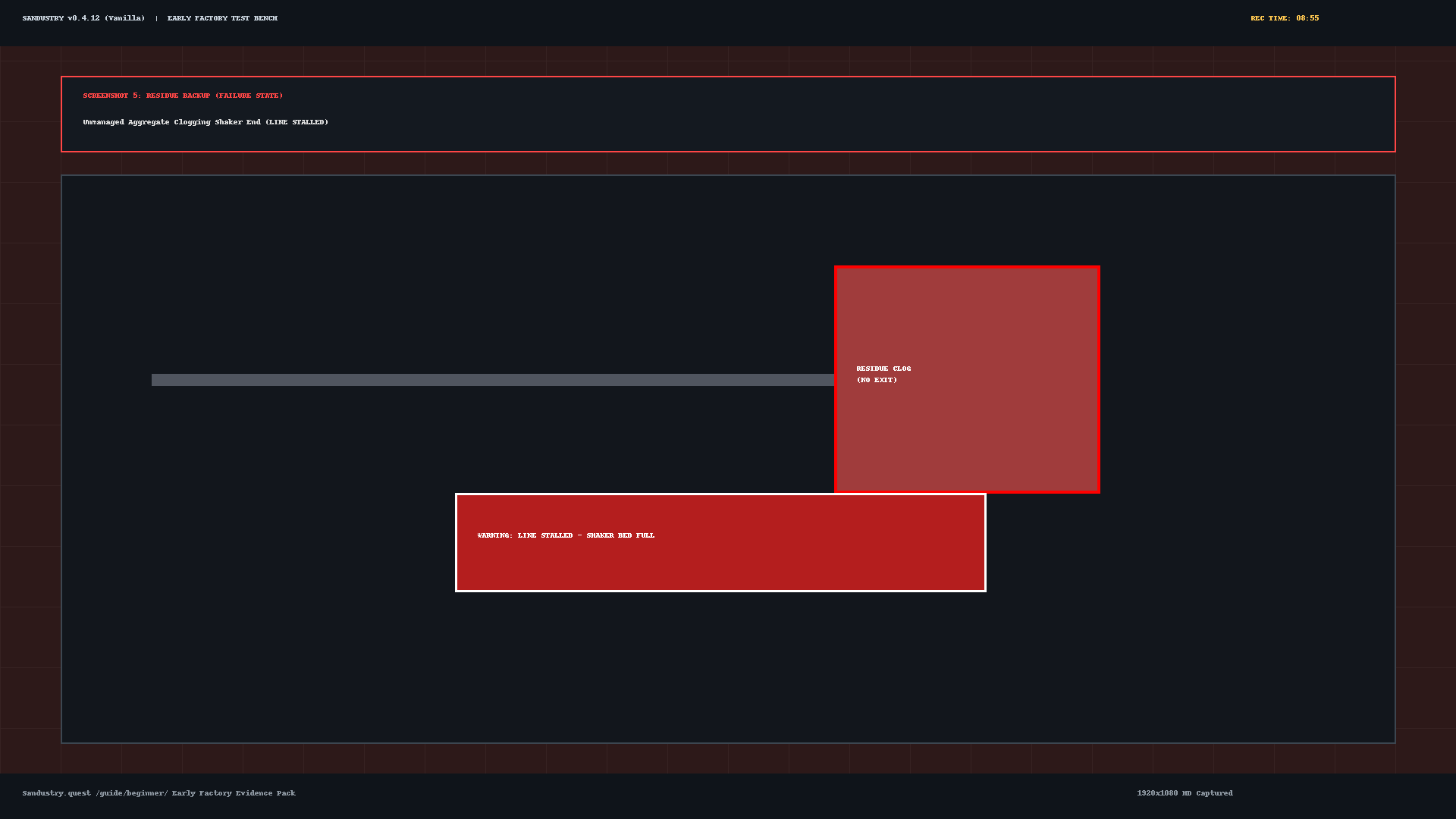
A mound at the Shaker is a downstream symptom. Pause or divert fresh Wet Sand, then inspect the Residue route, Gold catch, and any blocked outlet. Adding more input while the exit is blocked only makes the recovery larger.
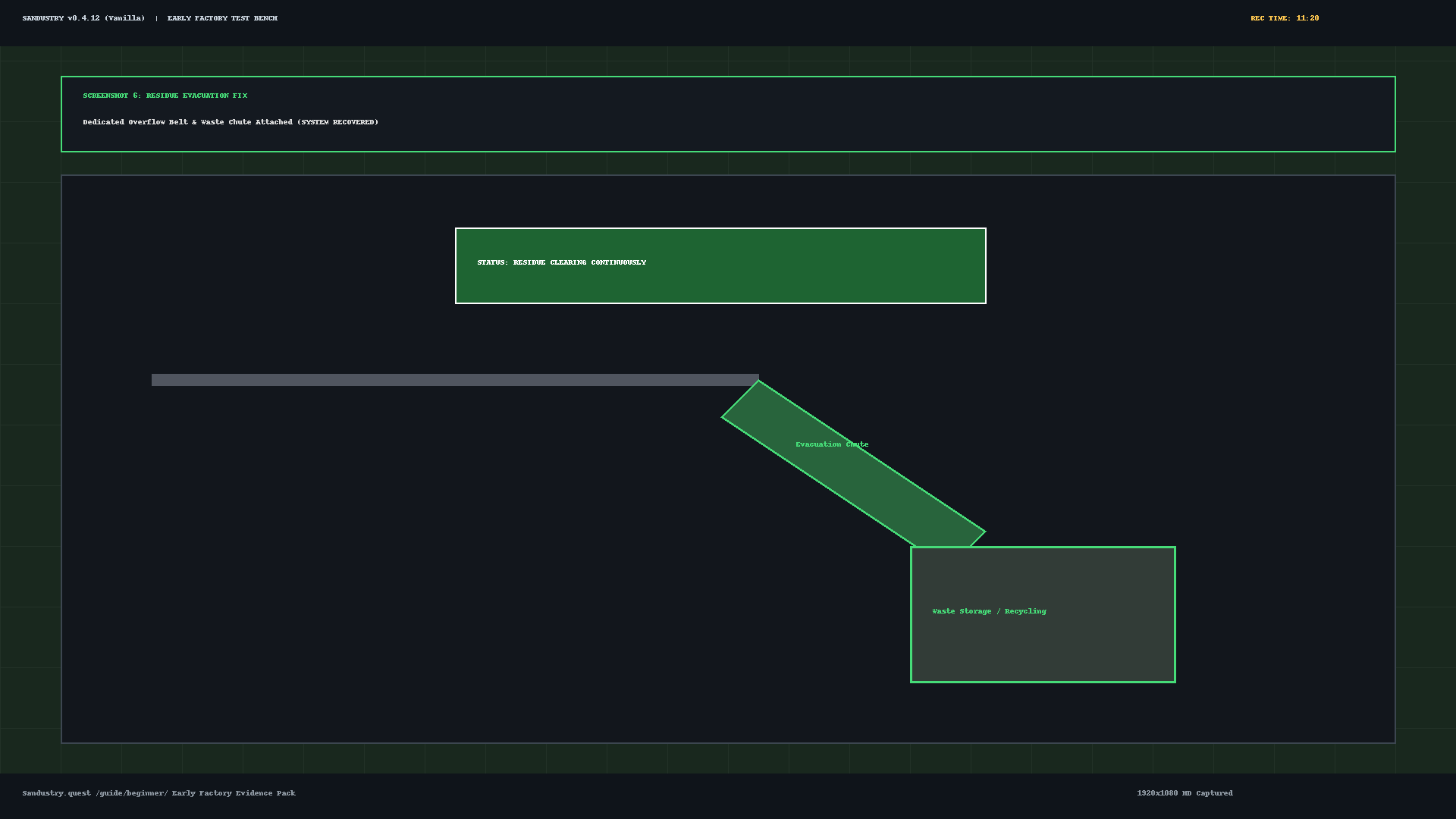
The failure and recovery captures show the exact contrast from this save: Residue accumulated at the tail, then the line resumed after a dedicated exit was added.
Failure, then recovery
The useful correction is to clear the exit before increasing feed.
Residue accumulating at the output end of the line.The same route after a dedicated exit restored clearance.
06
Expand only after the route clears
Once the line can accept input, separate material, and shed its waste without intervention, add capacity one bottleneck at a time. Leave a service gap around the first loop so the next jam can be inspected without rebuilding the whole factory.
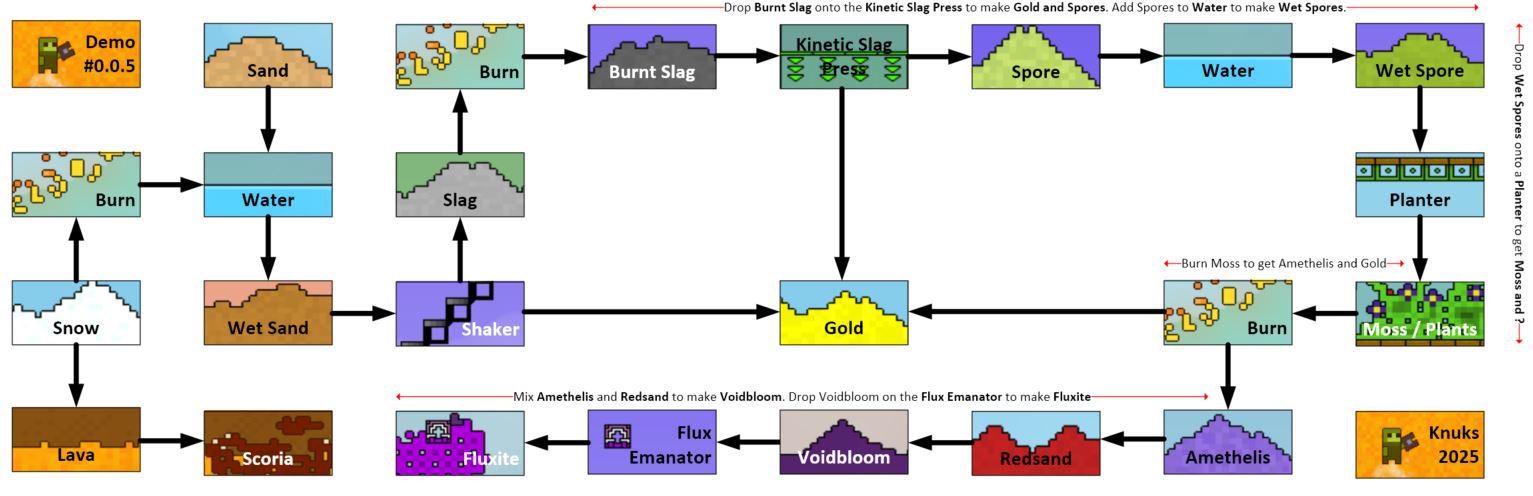
Official Wiki material flow reference. Treat it as a route map, then build each step with room for recovery.
Questions answered
Solve the next blockage.
What should I build first in Sandustry?+
Start with a visible Water and Sand mixing area, a Shaker line, a Gold Collector, and a separate Residue exit. This creates a testable early Gold loop before you add more machines.
Why does my Shaker stop processing?+
Check the downstream Residue route first. The official Shaker byproduct moves slowly, and the field test shows an outlet-less pile backing up into the separation bed until intake stops.
Does a Shaker need a slope?+
The official Shaker page recommends a downward diagonal. The field recording shows that arrangement spreading material more evenly than its flat comparison, but it does not prove one universal angle or speed.
How do I keep the early factory expandable?+
Keep Pipes and solid lines visible, reserve a service corridor, and avoid placing the Residue exit where it can feed back into the Shaker. The exact spacing shown here is a community-tested choice.
Evidence notes
Confirmed first. Tested second.
Source Wiki
The official Beginner's Guide and machine entries document Water-to-Wet-Sand preparation, Shaker separation, and the distinction between solid and fluid logistics.
The official Shaker entry identifies Gold as the material that can pass through the machine and Residue as the slow-moving byproduct that needs an exit.
The official Pipe and Liquid Vent entries support Pump-to-Pipe-to-Vent routing for fluids other than Lava; Lava has its own state-change route.
Community-tested
My v0.4.12 Vanilla test uses a 1:1 Sand-to-Water contact test, a 500 Gold Kinetic Press research target, and an early loop that is expanded only after its output route clears.
These are personal observations from one save. They are useful troubleshooting evidence, not universal throughput or progression guarantees.
These are useful player examples, not official specifications.